The latest news and updates from the ElectricSQL project.
Kyle Mathews
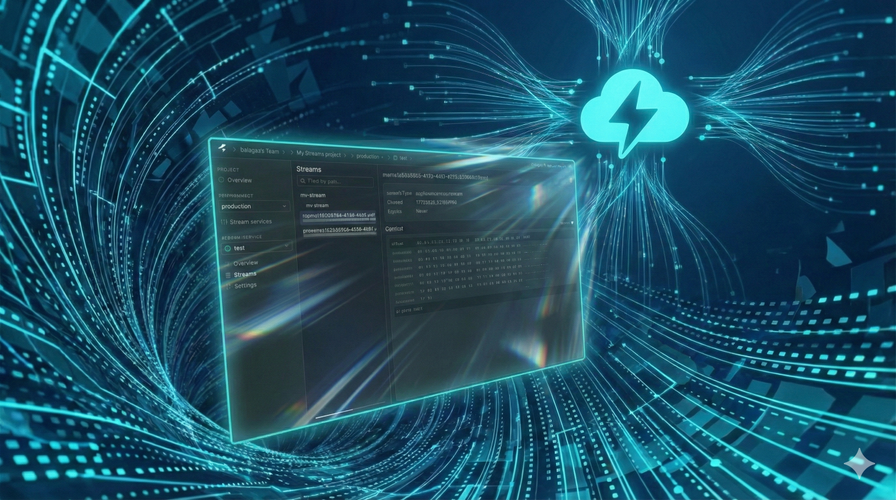
Hosted durable streams are live on Electric Cloud. You can now sync and stream AI sessions and low-latency real-time data alongside structured database changes.
Sam Willis
Four years ago, I described a "real-time collaborative parametric CAD app" on Hacker News — completely out of reach for a solo developer. In late 2025, LLMs changed the equation. Over the holidays, I built it — 70k lines of TypeScript, essentially all written by coding agents.
James Arthur
As the world moves to getting things done through agents, the winners are going to be the products that combine AI with team-based collaboration. Building AI apps on a Durable Session architecture is the best way to do that.
Two weeks after announcing Durable Streams, we're shipping 0.1.0 to npm—the first official packages you can install and use in production. This release introduces the State Protocol for database-style sync semantics and includes improved conformance tests.
We're open-sourcing Durable Streams, a persistent stream primitive and HTTP protocol for reliable, resumable, real-time data streaming into client applications. It's extracted from ~1.5 years of production use at Electric.
Ilia Borovitinov
A behind‑the‑scenes look at Electric's new storage engine: why we built it, how it works, and how it improves performance in production.
Agentic AI, beneath all the hype, is actually just normal software. You can build agentic systems with a database, standard web tooling and real-time sync.
Our last quarter was a reliability sprint. We set one goal: make ElectricSQL so boring‑reliable that you stop thinking about it and just build.
Tanstack DB is a reactive client store for building super fast apps on sync. Paired with Electric, it provides an optimal end-to-end sync stack for local-first app development.
More play less infra. With PGlite you can vibe code with a database built into the sandbox.
LLMs are generating code. That code is imperatively fetching data. That leads to a big ball of spaghetti.
AI apps are collaborative. Building them requires solving resumability, interruptibility, multi‑tab, multi‑device and multi‑user.
Electric Cloud is now in public BETA! This means it's open to everyone for immediate access.
With version 1.0 Electric is now in GA. The APIs are stable and the sync engine is ready for mission critical, production apps.
With version 1.0.0-beta.1, the Electric sync engine is now in BETA! If you haven't checked out Electric recently, it's a great time to take another look.
Local-first is often seen as eliminating your API. But what if you like your API or need to keep it as part of your stack? This post shows how you can develop local-first apps incrementally, using your existing API.
Electric Next is a new approach that we've adopted to building Electric. One that's informed by the lessons learned building the previous system and inspired by new insight from Kyle Mathews.
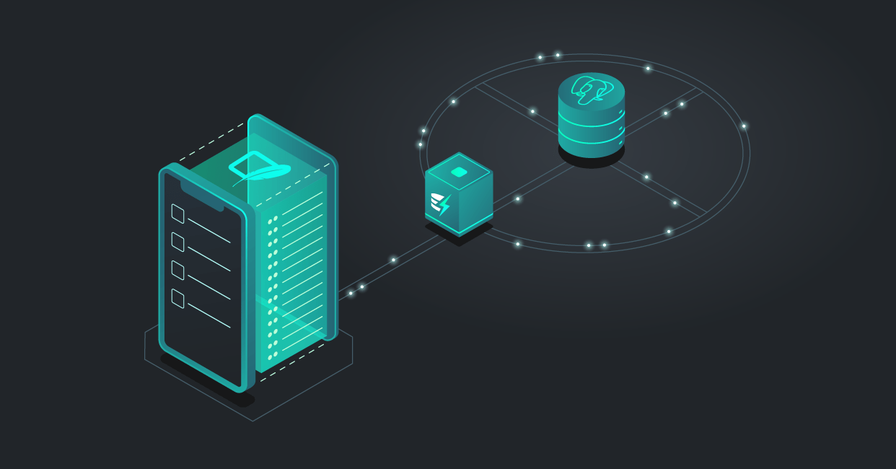
Version 0.11 of ElectricSQL. This is the first release with support for syncing to Postgres in the client.
We've published version 0.10 of Electric. This is the first release that properly supports where-clause and include-tree filtering with Shape-based sync.
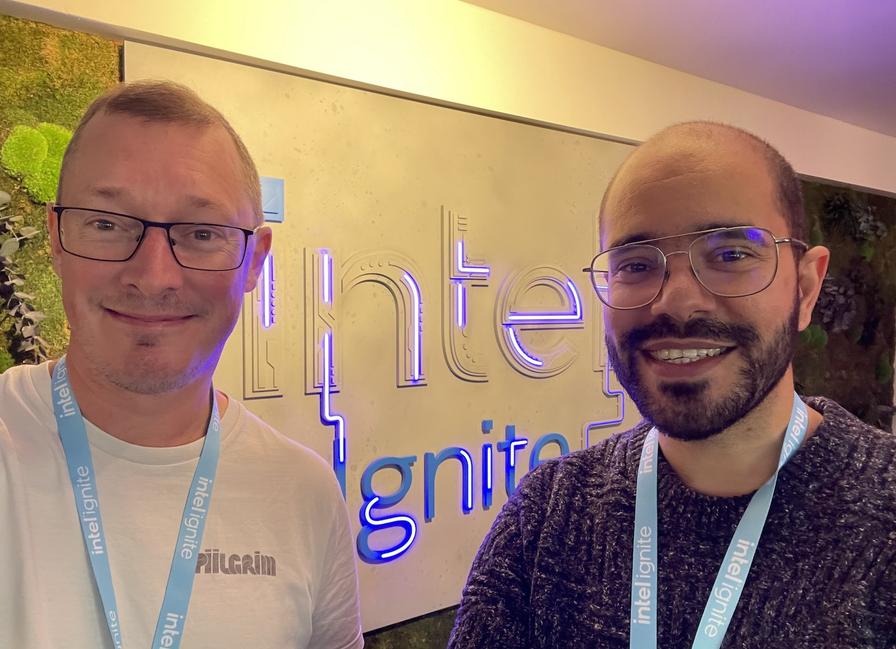
ElectricSQL was selected by Intel as one of 10 startups to participate in batch #6 of it's Intel Ignite accelerator programme in Munich.
Local AI with Postgres, pgvector and llama2, running inside a Tauri app with realtime sync powered by ElectricSQL 🤯 This is the architecture of the future!
Oleksii Sholik
To set the tone for 2024, we're kicking January off with a fresh release of Electric that introduces a whole slew of improvements to the experience of configuring, deploying, and developing with Electric.
> [!WARNING] > This post was written for a previous version of Electric that is no longer active. It is preserved for historical interest only. See the [Electric Next](/blog/2024/07/17/electric-next) post for context on the new system. One of the most common questions we get asked about developing on ElectricSQL and local-first in general is how to do secure, confirmed transactions like bookings and payments.
Version 0.8 of ElectricSQL has now been released. This release improves data model and deployment compatibility, including support for JSON and running on popular managed Postgres and, such as Supabase and Digital Ocean.
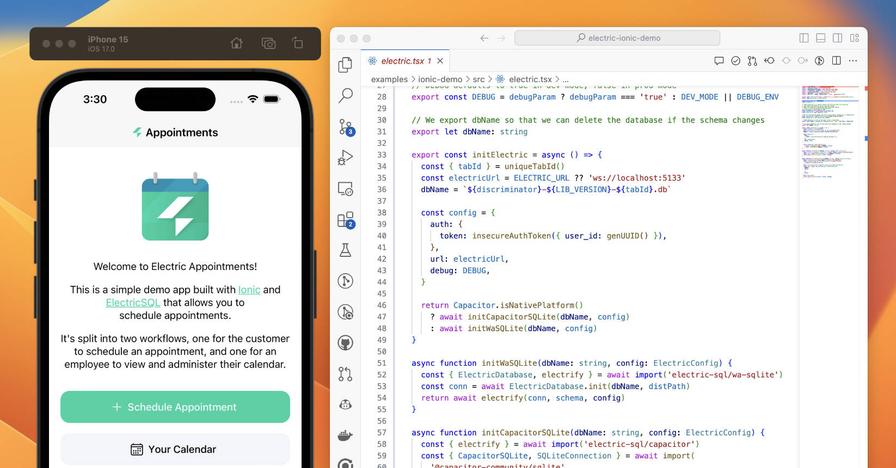
Introducing Electric Appointments, a demo mobile app built with the Ionic Framework and Capacitor.
We're thrilled to have published version 0.7 of ElectricSQL, which includes the new migration proxy and extended type support.
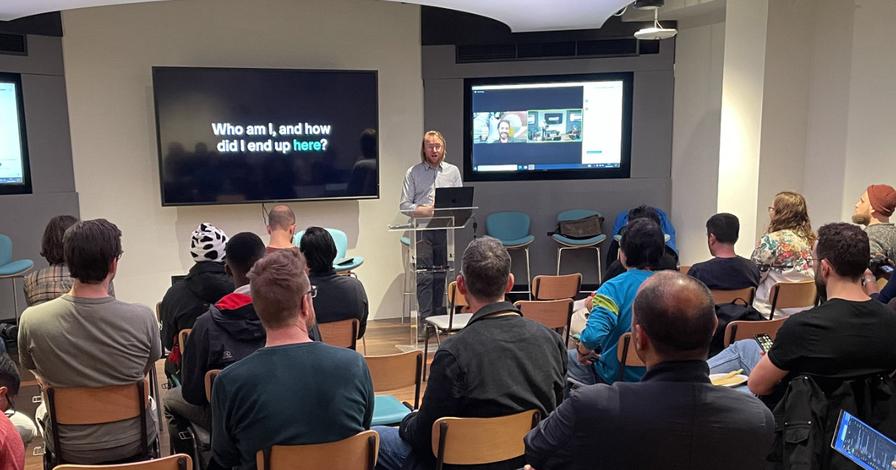
Last Thursday, the Electric team was excited to host the first Local-first Software London meet-up.
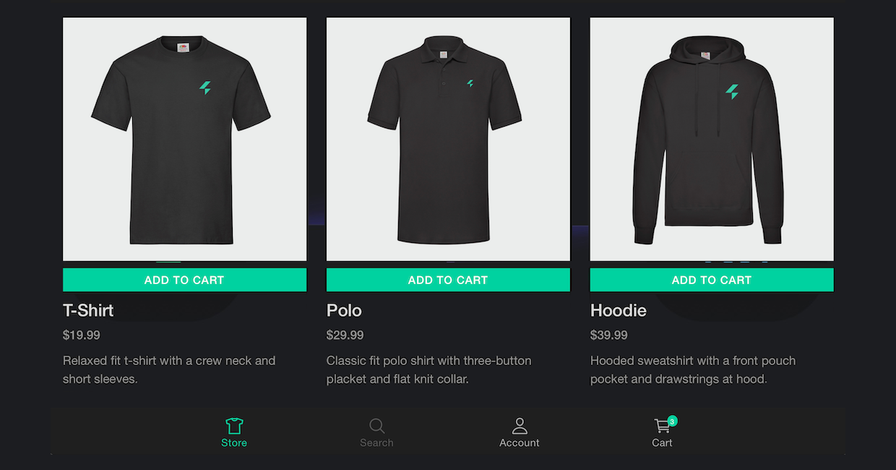
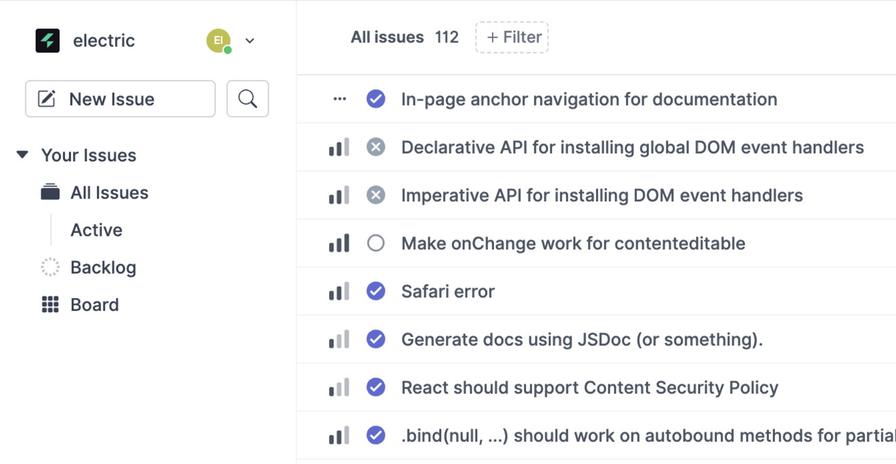
Introducing Linearlite, a simplified, lightweight clone of Linear.app built with Electric.
Purva Gujar
Sam Willis has joined the team as a Founding Engineer.
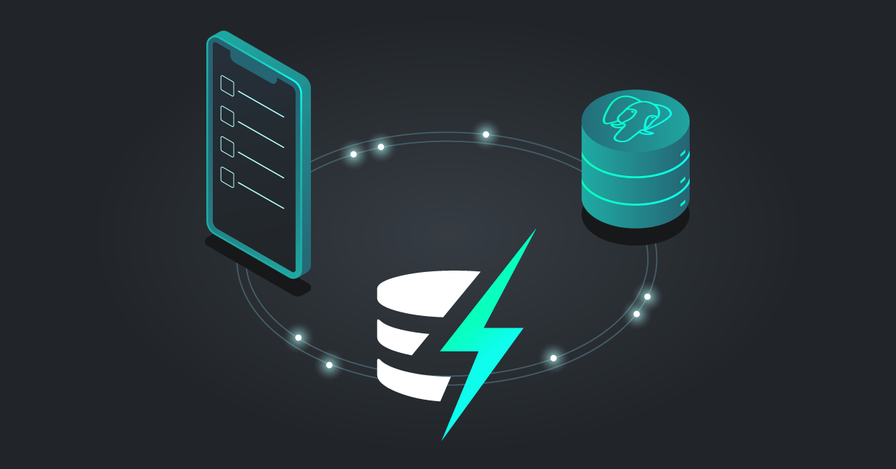
Introducing the v0.6 release of ElectricSQL. A local-first sync layer that you can use to build reactive, realtime, offline-capable apps directly on Postgres.
Electric is now backed by Andrei Miulescu and Oleksii Sholik has joined us as a Founding Engineer.
Local-first software is the natural evolution of state-transfer. It enables a modern, realtime multi-user experience, with built in offline support, resilience, privacy and data ownership.
José Valim, the creator of Elixir, distributed systems expert Kevin De Porre and startup engineering veteran Garry Hill have joined Electric.
Web development has been progressing through an evolution of state transfer. Local-first is the natural endgame and the vision we're working towards with Electric.
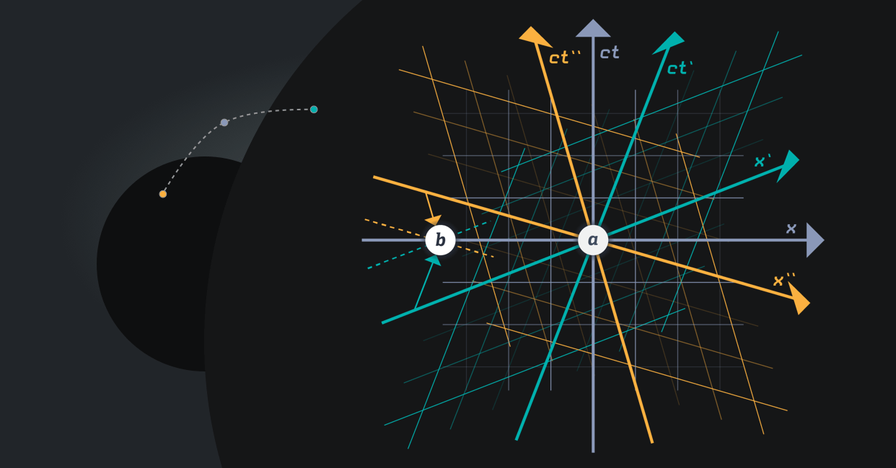
In this post we explore the assumptions that distributed databases are based on and investigate how causal consistency fits the reality of a relativistic universe.
Valter Balegas
Rich-CRDTs are conflict-free data types (“CRDTs”) extended to provide additional (“Rich”) database guarantees. These guarantees, such as constraints and referential integrity, make building local-first applications much simpler.

 Kyle Mathews